If you have ever walked through a Bolivian city after sunset and caught the smell of charcoal smoke mixed with garlic and vinegar, you already know what anticucho is. That smoky pull toward a lit-up cart on the corner is not an accident. It is a ritual that has been happening on Bolivian streets for generations, and once you taste it, you will understand why so many people search for the best anticucho boliviano near me the moment they land in La Paz, Cochabamba, or Santa Cruz.
This dish is simple on paper. Skewered beef heart, grilled over open flame, served with potatoes and peanut sauce. But the way it is prepared, sold, and eaten says a lot about Bolivian culture itself. Let’s walk through what makes it special, and how you can track down a truly good one.
Table of Contents
ToggleWhat Is Anticucho Boliviano, Really?
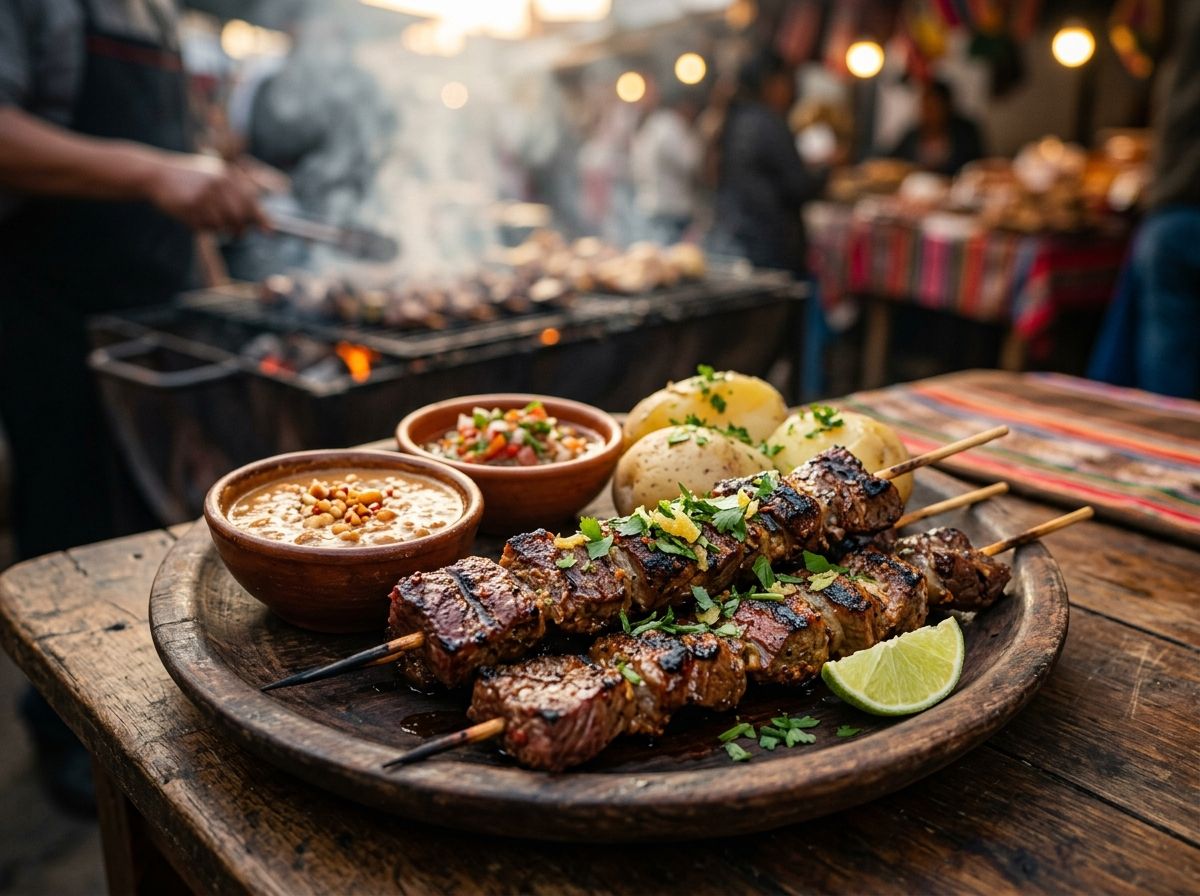
Anticucho boliviano is a grilled skewer dish made from thin slices of beef heart, marinated in vinegar, oil, garlic, and a mix of spices, then cooked slowly over charcoal. It is usually served hot with roasted potatoes and a spicy peanut sauce called llajua de maní.
It sounds like a small snack, but in Bolivia it carries real weight. Families have sold it for decades from the same corner. Neighbors recognize each other by which anticuchera cart they visit at night.
The Quechua Roots of the Word Anticucho
The word itself comes from Quechua, the language of the Andes. It is a mix of terms tied to the eastern regions of the old Inca territory and the idea of cutting meat. The dish traces back to the pre-Columbian era, long before Spanish colonization changed how Andean people cooked and ate.
When the Spanish arrived, they brought new tools and new social divisions to the table. Prime cuts of meat went to the wealthy. Organ meat, including heart, was left for enslaved and working-class people. Over time, those humble cuts became the base of one of the most loved street foods in South America.
Beef Heart: The Star Ingredient
Heart might sound intimidating if you have never tried it, but it behaves more like a lean, dense steak than an organ meat in the way people usually imagine. Once it is sliced thin and marinated well, it grills up tender with a slightly chewy bite and a rich, almost beefy-plus flavor.
That is the base of nearly every anticucho boliviano recipe you will find, whether it is from a street cart or a home kitchen.
How to Find the Best Anticucho Boliviano Near Me
This is usually the real question people are asking. Not what anticucho is, but where to actually get a good one tonight. Here is what to look for.
Look for the Smoke and the Crowd
A good anticucho stand rarely needs a sign. You will smell the charcoal before you see the cart, and you will notice people already standing around it. In many Bolivian cities, anticucheras put on a small show with flames rising off the grill to catch attention from a distance. If there is a line and a fire show, that is usually a strong signal you found a solid spot.
Ask Locals Where They Go After Dark
Anticucho is mostly a nighttime food. It shows up on plazas, boulevards, and busy corners once the sun goes down. Locals almost always have a regular cart they trust, one they have been going to for years. Asking a taxi driver, a shop owner, or even someone waiting in line is often more useful than searching online, since many of the best stands do not have a website or listing at all.
Check for Fresh Llajua and Peanut Sauce
The sauce tells you a lot. If the peanut sauce looks freshly made and the llajua smells sharp and spicy rather than watery, the vendor is likely putting real care into the food. A tired-looking sauce sitting out too long is usually a sign to keep walking.
What Makes a Bolivian Anticucho Stand Out From Peruvian Anticuchos
Anticuchos exist across the Andes, including in Peru, Chile, and Ecuador, but the Bolivian version has its own personality. While Peruvian anticuchos often lean on a chili paste called aji panca for color and heat, the Bolivian style usually skips that route and focuses on a garlicky vinegar marinade paired with peanut sauce on the side.
The Peanut Sauce Difference
In Bolivia, peanuts are not optional. The sauce made from roasted peanuts, chili, and sometimes tomato is almost as important as the meat itself. It adds a creamy, slightly sweet contrast to the smoky, tangy skewer.
Llajua vs Aji Panca
Llajua is a spicy Bolivian salsa made from locoto pepper and tomato, and it shows up on nearly every Bolivian table, anticuchos included. Aji panca, on the other hand, is a mild, dark red pepper paste more common in Peruvian versions of the dish. Both add heat and color, but the flavor profile is noticeably different, and locals in Bolivia tend to be loyal to their llajua.
The Best Time and Place to Eat Anticucho Boliviano
Timing matters more than people expect. Anticucho is a night dish through and through.
Street Corners, Plazas, and Night Markets
You will find the best anticucho boliviano near plazas, university areas, and busy street corners once evening hits. Night markets are another strong bet, since several vendors often set up side by side, which makes it easy to compare and pick the busiest cart.
Anticucheras: The Women Behind the Grill
The vendors who sell anticuchos are affectionately called anticucheras, and many of them are women who have run the same cart for years, sometimes passing the business down through the family. Their skill is not just in the marinade. It is in timing the grill so the heart stays tender instead of turning rubbery.
What to Expect When You Order
If it is your first time, here is a quick picture of what typically lands in your hands.
Typical Anticucho Boliviano Plate
- Two to three skewers of grilled beef heart
- A boiled or roasted potato
- A generous spoonful of peanut sauce
- A side of llajua for extra heat
Some vendors also add a slice of grilled cheese or a bit of corn, depending on the region.
Price and Portion Expectations
Anticucho has always been considered an affordable, working-class food, and that has not really changed. It is meant to be quick, filling, and easy on the wallet, which is part of why it remains such a popular late-night option across Bolivian cities.
Tips for Choosing a Quality Anticucho Stand
If you want to skip the trial and error, keep these points in mind.
- Choose stands with visible, hot charcoal rather than a lukewarm grill.
- Watch how the vendor slices the meat. Thin, even cuts usually mean more care in prep.
- Notice if the sauces are made fresh in small batches rather than sitting out all night.
- Pay attention to turnover. A busy stand usually means fresher meat and quicker cooking.
- Trust repeat customers. If the same people keep coming back, there is a reason.
Can You Make Anticucho Boliviano at Home?
Yes, and it is not as complicated as it might sound, even if beef heart feels unfamiliar at first.
Basic Marinade Ingredients
A simple version usually includes vinegar, garlic, cumin, oil, salt, and pepper. Some cooks add a touch of paprika or oregano for extra depth. The heart should marinate for at least a couple of hours, though overnight gives a better result.
Grilling Tips
Slice the heart thin, thread it onto skewers, and grill over medium-high heat for a few minutes per side. Baste with leftover marinade as it cooks, and pull it off the grill while the center is still slightly pink to keep it tender rather than tough.
Serve with boiled potatoes and a peanut sauce on the side, and you have a fairly close version of what you would find on a Bolivian street corner.
Final Thoughts on Tracking Down a Great Anticucho
Finding the best anticucho boliviano near me usually comes down to following your nose, trusting the crowd, and being willing to eat standing up on a street corner at night. It is not a dish you find through fancy reviews. It is a dish you find by walking toward the smoke, watching where locals line up, and giving it a try yourself.
Once you taste a well-made skewer with fresh peanut sauce and a spoonful of llajua on the side, you will understand why this humble street food has stuck around for centuries and why people keep coming back for more, night after night.