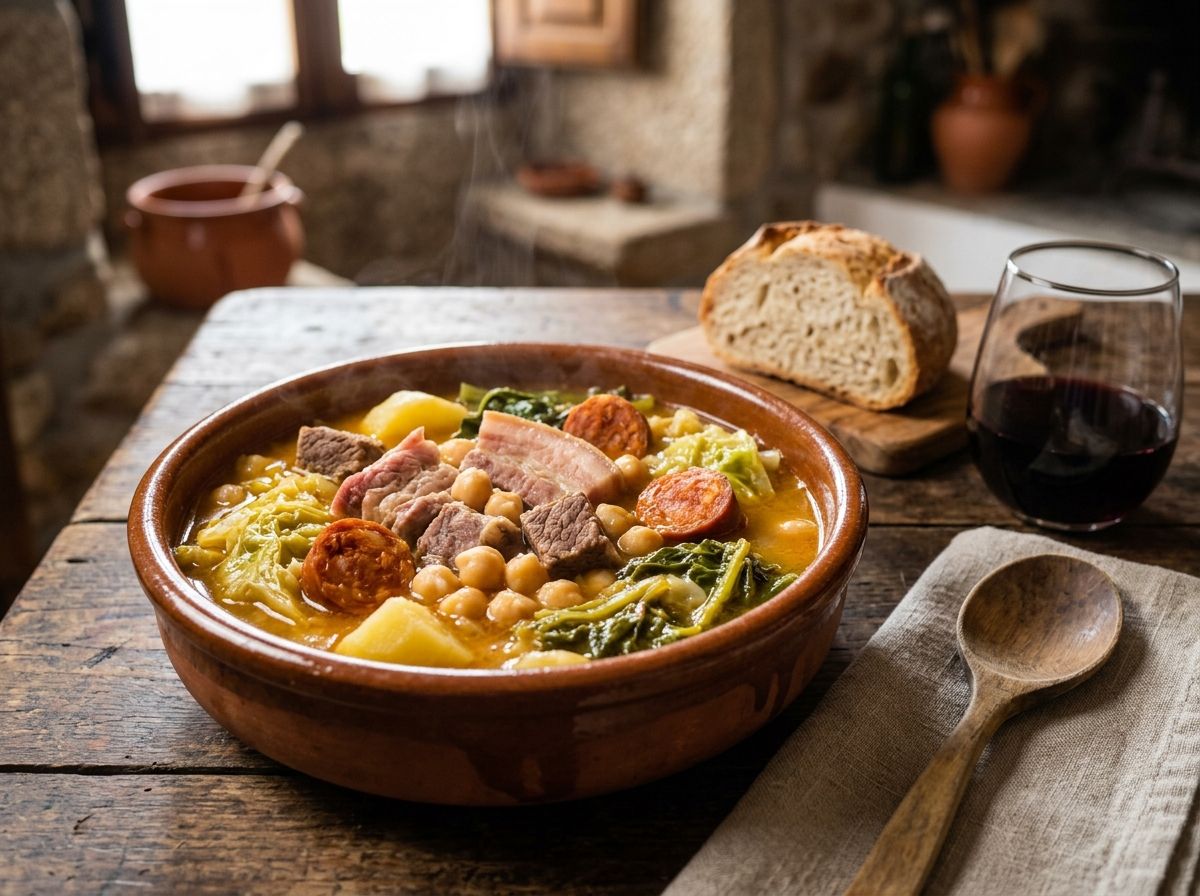
If you’ve ever typed “best cocido gallego near me” into your phone while your stomach growled, you already know the feeling. You want something hearty. Something that tastes like it took hours of care to make. Something that warms you from the inside out on a cold afternoon.
Cocido gallego is exactly that dish. It’s a slow-cooked Galician stew built from chickpeas, potatoes, greens, and a generous mix of pork. It’s not fancy. It’s not trying to impress you with plating. It’s the kind of food that makes you slow down, because rushing through a bowl of cocido feels almost disrespectful to whoever spent the morning making it.
In this guide, we’ll walk through what cocido gallego actually is, what makes one version better than another, and how to spot the real deal when you’re searching for the best cocido gallego near me in your own city.
Table of Contents
ToggleWhat Is Cocido Gallego, Exactly?
Cocido gallego is a traditional stew from Galicia, a region in the northwest corner of Spain known for its rainy weather, green hills, and serious love of pork. The word “cocido” simply means “cooked,” which sounds almost too simple for a dish this layered.
At its core, cocido gallego combines chickpeas, potatoes, cabbage, and several cuts of pork, all simmered together for hours in the same pot. Depending on the household, you might find lacón (cured pork shoulder), chorizo, pork ribs, or even pig’s ear in the mix. Nothing goes to waste. That’s part of the tradition.
The stew traces back to a time when Galician farming families needed a way to stretch every part of the pig after the annual matanza, the yearly slaughter. Salting and curing preserved the meat through winter, and cocido became the dish that used it all up, bit by bit, bone by bone.
How Cocido Gallego Differs From Caldo Gallego
People mix these two up constantly, so let’s clear it up. Caldo gallego is a lighter broth soup, usually made with white beans, greens like grelos or collard greens, potatoes, and a bit of pork fat called unto. It’s soupy and simple, often eaten as an everyday meal.
Cocido gallego is the heartier cousin. It uses chickpeas instead of white beans, includes more cuts of meat, and is typically reserved for special occasions like Sunday lunch, Carnival, or family gatherings. Think of caldo as the daily bread and cocido as the Sunday feast.
What Makes a Truly Great Cocido Gallego
Not every bowl labeled “cocido gallego” on a menu deserves the name. Here’s what separates the ones worth seeking out from the ones that are just going through the motions.
Quality of the pork.
A great cocido uses real lacón, proper chorizo, and cuts that have been cured or smoked the traditional way. If the meat tastes like an afterthought, the whole dish falls apart.
Chickpeas that hold their shape
. Overcooked chickpeas turn to mush. The best versions have chickpeas that are soft enough to melt in your mouth but still hold together on the fork.
A broth with real depth.
The liquid left over after cooking a good cocido is almost a dish on its own. It should taste rich, slightly smoky, and layered from hours of simmering with bone and meat.
Balance, not overload
. Yes, cocido gallego is meat-heavy. But the best kitchens still balance it with cabbage or greens, cutting through the richness so you don’t feel weighed down after one bowl.
Signs You’ve Found the Best Cocido Gallego Near Me
When you’re scouting restaurants or Galician-style eateries, a few clues can tell you a lot before you even taste a bite.
- The dish is often only available on certain days, usually weekends, because it takes real time to prepare properly.
- The menu lists specific cuts like lacón or morcilla instead of a vague “assorted meats.”
- Locals or regulars order it, not just tourists chasing a photo.
- The kitchen serves it in the traditional style, with meats, chickpeas, and greens presented separately rather than all mashed into one bowl.
If a place checks most of these boxes, you’re probably close to the best cocido gallego near me that your area has to offer.
Where To Actually Look For Cocido Gallego Near You
Finding authentic cocido gallego usually means looking beyond the generic “Spanish restaurant” search. Here are a few smarter starting points.
Spanish and Galician Specialty Restaurants
Search specifically for Galician cuisine rather than general Spanish food. Restaurants that highlight their Galician roots are far more likely to serve a properly made cocido, since it’s a point of pride for them, not just another item on a broad tapas menu.
Restaurants Near Camino de Santiago Routes
If you’re anywhere near a city connected to the Camino de Santiago pilgrimage, you’re in luck. Towns along these routes tend to hold onto traditional recipes because pilgrims and travelers actively seek out authentic regional food, and cocido gallego is one of the dishes they ask for most.
Family-Run Spanish Kitchens
Smaller, family-owned spots often outperform bigger restaurants when it comes to dishes like this. Cocido gallego is a recipe passed down through generations, so a kitchen with deep family ties to Galicia is more likely to nail the flavor and technique.
Seasonal and Weekend Menus
Because cocido takes so long to prepare, many kitchens only offer it on weekends or during colder months. If you search and can’t find it on a Tuesday, try again on a Saturday. Timing really does matter here.
How Cocido Gallego Is Traditionally Served
Part of what makes cocido gallego such a memorable meal is the way it reaches the table. Instead of one mixed bowl, tradition calls for separate courses from the same pot.
First comes the broth, sometimes with noodles or rice added, served as a starter to warm you up. Next, the meats arrive on their own platter, sliced and ready. Then the chickpeas, potatoes, and greens follow as a side dish. It’s less like eating a stew and more like working your way through a small feast, one course at a time.
This style of serving also explains why cocido gallego takes so long to prepare properly. Each component needs its own attention, even though everything cooks in the same broth.
Pairing Suggestions For The Full Experience
A bowl of cocido gallego pairs beautifully with a crisp Galician white wine, like an Albariño, which cuts through the richness of the pork. Many locals also enjoy it with a simple glass of red from the Ribeira Sacra region if the meal leans heavier on chorizo and cured meats.
For dessert, something light works best. Tarta de Santiago, the almond cake famous throughout Galicia, is a classic way to close out the meal without feeling overloaded.
Why This Dish Is Worth Seeking Out
There’s something honest about cocido gallego. It doesn’t hide behind fancy sauces or trendy plating. It’s built from patience, from using every part of the animal, and from a culture that values slow food long before that phrase became a trend.
When you search for the best cocido gallego near me, you’re not just looking for lunch. You’re looking for a bit of Galician tradition on your plate, made the way generations of families have made it before you. Take your time with it, order it with people you like spending hours at a table with, and let the broth do what it’s always done: bring people together over a very full pot.
