If you have ever typed “best asado negro near me” into your phone at nine o’clock on a Sunday night, you already understand the pull of this dish. There is something about a slow-cooked beef roast, dark and glossy with caramelized sauce, that makes people stop scrolling and start searching. This is not a dish you forget once you have tried it.
Asado negro is one of Venezuela’s most loved home-cooked meals. It is not flashy. It does not need a fancy plate or a garnish tower. It just needs time, a good cut of beef, and a little patience in the kitchen.
In this guide, we will walk through what asado negro actually is, why people go out of their way to find it, and how you can track down the best asado negro near me wherever you happen to be.
Table of Contents
ToggleWhat Is Asado Negro?
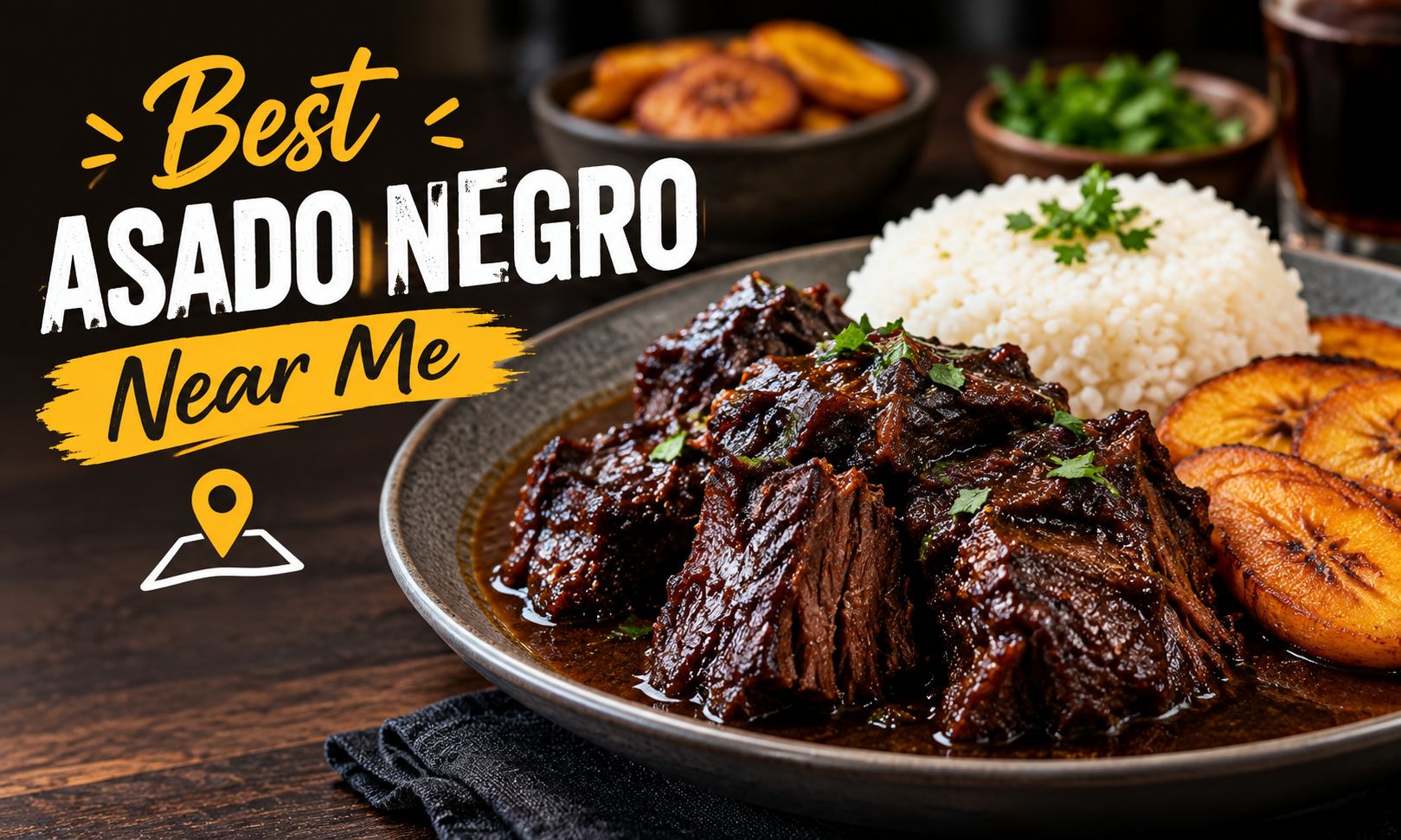
Asado negro literally translates to “black roast” in Spanish. The name comes from the deep, almost mahogany color the beef takes on during cooking.
That color is not from burning the meat. <cite index=”1-1″>It comes from searing the beef in caramelized papelón, an unrefined cane sugar, which creates a rich, dark crust and a sauce that turns almost black as it reduces.</cite>
The meat is usually marinated first in a mix of garlic, onion, wine, and Worcestershire sauce. Then it is seared and slow-cooked for hours until it becomes fall-apart tender. <cite index=”2-1″>The first known recipe for asado negro was documented in Caracas back in 1861</cite>, so this is a dish with real history behind it.
The Role of Papelón in Asado Negro
Papelón is the ingredient that makes asado negro taste like nothing else. <cite index=”2-1″>It is a natural, unrefined cane sugar made by boiling sugarcane juice down until it solidifies into a dense block, and it holds onto all the molasses flavor that white sugar loses.</cite>
That deep, earthy sweetness is what balances out the savory, slightly tangy sauce. If you ever order asado negro and the sauce tastes flat or overly sweet, chances are the kitchen skipped the papelón or used a poor substitute.
Why People Search for the Best Asado Negro Near Me
Asado negro is not the kind of dish you whip up on a random Tuesday. It usually needs a full day of marinating and several hours of slow cooking. That is exactly why so many people would rather search for the best asado negro near me than attempt it at home.
There is also an emotional pull here. For many Venezuelan families living abroad, asado negro is tied to Sunday lunches and holiday tables back home. <cite index=”5-1″>One home cook described it as one of the most typical dishes in Venezuela, made for special occasions and passed down through family memory rather than a written recipe.</cite>
Finding a restaurant that gets this dish right can feel like a small piece of home, even for people who have never set foot in Venezuela.
How to Find the Best Asado Negro Near Me
Searching for good Venezuelan food does take a bit more effort than typing a generic phrase into a search bar. Here is a simple approach that actually works.
Step 1: Search for Venezuelan Restaurants Specifically
Instead of searching “best asado negro near me” alone, try pairing it with your city or neighborhood name. Venezuelan restaurants are still fairly niche outside major metro areas, so narrowing your search helps a lot.
Step 2: Check the Menu Before You Go
A real Venezuelan kitchen will usually list asado negro alongside other classics like hallacas, pabellón criollo, or pan de jamón during the holidays. If a place only has a vague “Latin fusion” menu, it may not specialize in this specific dish.
Step 3: Read Reviews for Mentions of Sauce and Tenderness
Look for reviewers who specifically mention the sauce being rich and dark, or the beef being tender enough to fall apart with a fork. That is the real test of a properly made asado negro.
Step 4: Ask About Sides
<cite index=”3-1″>Traditional asado negro is almost always served with white rice or creamy mashed potatoes to soak up the sauce, plus sweet fried plantains known as tajadas.</cite> If a restaurant serves it without any of these, that is worth noting.
What Makes an Authentic Asado Negro Stand Out
Not every dark beef roast is a true asado negro. There are a few markers that separate the real thing from an imitation.
The Sauce Should Be Glossy, Not Greasy
The sauce should look syrupy and almost black, with a shine to it rather than an oily film on top.
The Meat Should Fall Apart Easily
<cite index=”1-1″>When beef is cooked low and slow the way asado negro requires, it becomes so tender that it can be difficult to slice cleanly, and many home cooks simply pull it apart like shredded beef instead.</cite> If your fork glides through it with almost no resistance, that is a very good sign.
The Flavor Should Be Sweet and Savory, Not Just Sweet
<cite index=”4-1″>Asado negro combines savory and sweet notes, with the caramelization process giving it a deep flavor alongside a juicy, tender texture.</cite> If a dish tastes like candy with no savory backbone, something was off in the marinade.
Asado Negro at Home vs Eating Out
Some people do prefer making asado negro themselves, especially around the holidays. It is worth understanding both sides before deciding whether to cook or go searching for the best asado negro near me.
Making It Yourself
Cooking asado negro at home means full control over the ingredients. You can choose your cut of beef, adjust the sweetness, and make sure the papelón is real. <cite index=”5-1″>The tradeoff is time, since the meat typically needs to marinate in the fridge for a full 24 hours before cooking even begins.</cite>
Ordering From a Restaurant
Going out saves the marinating and hours of slow cooking, but quality varies a lot from kitchen to kitchen. This is exactly why doing a little homework before choosing a restaurant matters so much.
Common Questions About Asado Negro
Is Asado Negro Only Served at Christmas?
No. <cite index=”4-1″>While asado negro can be enjoyed year-round, it has found a special place on holiday tables as a popular alternative to pork.</cite> Many families also make it for Sunday lunches and birthdays.
What Cut of Beef Is Used?
Most recipes call for a boneless beef roast, often eye round or a similar lean cut that holds up well during long, slow cooking.
What Should I Order Alongside Asado Negro?
Rice, mashed potatoes, and sweet plantains are the classic pairings. Some restaurants also offer yuca or roasted vegetables as a lighter option.
Can Asado Negro Be Made With Other Meats?
Beef is traditional, but some home cooks experiment with pork as a substitute. The flavor and cooking time will shift depending on the meat you choose.
Final Thoughts
Asado negro is one of those dishes that rewards patience, both in the kitchen and in the search for a good version of it. The dark, caramelized sauce and tender beef are worth the effort of tracking down a restaurant that actually knows what they are doing.
Next time you find yourself searching for the best asado negro near me, remember to look past the generic search results. Check the menu, read the reviews closely, and pay attention to how the sauce and sides are described. A little research goes a long way toward finding a plate that actually tastes like someone’s grandmother made it.
And if you cannot find a spot nearby that does it justice, there is always the option of clearing your Sunday afternoon and giving it a try yourself. Either way, this is a dish worth the sear